Call for Participants: Young Baltic Energy Futures (Training course)
Date: 30th August – 3rd September 2026
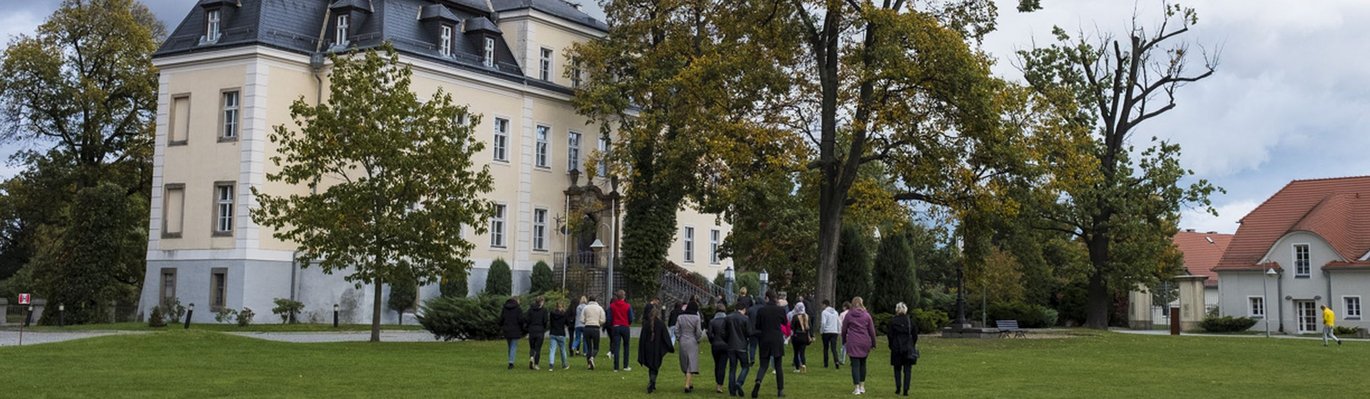
Place: Trebnitz, Germany
Application deadline: 26th July 2026.
Language: English
Background
Energy supply, geopolitical stability, and climate action are more closely interconnected than ever in the Baltic Sea region. Especially since Russia’s war of aggression against Ukraine and the debates on the vulnerability of energy infrastructure, it has become clear that the energy transition is not only an ecological challenge, but also a security and societal issue; one that can only succeed through European, cross-border cooperation.
Young people are particularly affected by the long-term consequences of this transformation, yet they are still only limitedly involved in cross-border dialogue and concrete shaping processes. What matters is not education alone, but above all the meaningful inclusion of young people in political decision-making and their collaboration with actors from politics, business, academia, and civil society.
Young Baltic Energy Futures
The training course aims to explore the energy transition as a topic that connects climate action and energy security. It will take place from 30th August – 3rd September (including travel time) in Trebnitz (near Berlin). Through interactive workshops, participants will co-create and test non-formal education methods that can be used in educational settings. The programme is complemented by inputs and discussions with selected experts and stakeholders (see program draft for further information), who will contribute perspectives from policy, practice, and research and support participants in refining approaches that are transferable to youth work.
The project is co-funded by the European Union and the German Federal Foreign Office.
Objectives of the training:
- Strengthening competences on the climate–energy–security nexus: participants will deepen their understanding of how the energy transition links energy supply, geopolitical stability and climate action in the Baltic Sea region, and explore how to address these connections in youth work and education.
- Co-creating non-formal methods for energy transition education: participants will share experience and co-design workshop modules and facilitation tools on the topic of energy transition at the intersection of security and climate action and explore how to translate this into accessible learning formats for young people as part of a handbook to be created within the project’s framework
- Empowering young people through dialogue and agency: the training will explore approaches that help young people connect local realities with wider European challenges, strengthen their sense of agency, and engage constructively with future questions around a just and resilient energy transition.
- Fostering Baltic Sea region exchange and networking: participants will learn from each other’s contexts and practices, build cross-border connections through dialogue and exchange formats
Programme draft
You can find a first programme draft here.
When and where?
The training course takes place from 30th August- 3rd September 2026 (including two travel days) in Trebnitz (near Berlin), Germany.
Who can participate?
This training is open to for people from diverse backgrounds, including youth leaders, students, professionals of NGO, project managers in relevant fields
who
- would like to strengthen their skills in addressing the climate-energy-security nexus with other young people
- have an interest to shape future youth projects as part of Young Baltic Energy Futures project of Kreisau-Initiative
- are fluent in English
- live in one of the Baltic sea countries: Denmark, Estonia, Finland, Germany, Latvia, Lithuania, Norway, Poland, Sweden
Costs
There is no participation fee to take part in this project.
Travel reimbursement
Travel costs will be reimbursed based on actual expenses, up to the maximum lump sum amounts determined by travel distances (in EUR). The distance band of maximum reimbursement per participant is based on the Erasmus+ Distance Calculator.
- 10-99 km –green travel 56 €
- 100-499 km – green travel 285€
- 500-1999 km – 309€/ green travel – 417€
If you are selected, please get in touch with us to arrange the booking of your travel tickets and the reimbursement of your travel expenses. Do not book your travel independently.
We will help you to find the best itinerary. We strive to protect the environment and act sustainably. Therefore, we encourage participants to avoid travelling by plane wherever possible.
How to apply?
Please fill in the application form by 26th July 2026.
The participants will be selected on the basis of motivation and the available number of places per country. All applicants will be informed about the selection results by 29th July, 2026.
Contact for questions
Pascal Goddemeier
E-Mail: goddemeier [at] kreisau.de
Phone: +49 (0) 30 53 89 31 63 65