Call for Participants: Recreation – The History of Verschickungskinder in Post-War Germany and beyond – Training course

Date: 26th March to 1st April, 2026
Place: Detmold, Germany
Application deadline: 18th January 2026
Language: English
About the training course:
This training course will focus on the history of the Verschickungskinder (“sent-away children”), children who were sent to children’s health resorts and sanatoriums in Germany, the Netherlands or Italy, between the 1950s and 1980s, under the guise of “recreation”, medical care and recovery. Many of these children, sent alone and without their parents, were subjected to harsh conditions, neglect, and abuse - experiences that have long remained in the shadows of post-war history. Though the program was officially intended to improve children’s health, in practice, it led to extensive physical and psychological harm for many.
Beyond the German context, the training will place these experiences within a broader European perspective. Participants will be invited to explore practices of institutional violence, child separation, and state or authority-sanctioned interventions in the post-war period in their own countries. Through exchange and comparative reflection, the training course aims to identify common patterns, societal mechanisms, and long-term consequences of authoritarianism and violence in pedagogy, many of which continue to shape child welfare systems and institutional care across Europe today.
On a second level, “Recreation” denotes a creative act of re-creation: a process of revisiting, reconstructing and critically processing historical experiences of institutional care and violence. Through creative methods, the project seeks to question and transform it into a space of reflection.
This approach directly informs the structure and aims of the training course. Participants will explore the history of the Verschickungskinder, examine the lasting consequences of this practice, and develop a deeper understanding of broader issues surrounding children’s rights and institutional violence in post-war Germany and Europe. By connecting creative forms of re-creation with historical and educational inquiry, the training course will further encourage participants to reflect on how historical forms of institutional violence against children are connected to present-day debates on child protection, care systems, and children’s rights. By linking past experiences with current challenges in social and educational institutions, the training aims to foster critical awareness of how power, neglect, and abuse can persist if such histories remain unexamined.
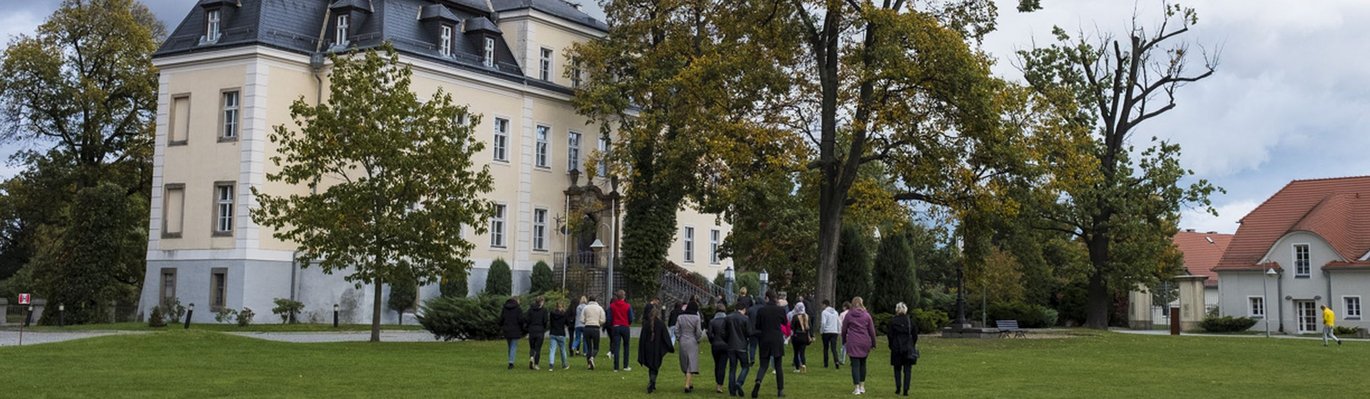
The training will take place in Detmold, in close proximity to one of the former children’s health sanatorium, offering a unique opportunity to engage with witnesses, explore the local history, and reflect on how these traumatic experiences can be communicated and remembered today.
What the training course will offer:
- Historical Context and Personal Testimonies:
Participants will gain an in-depth understanding of the history of the Verschickungskinder, exploring the institutionalized violence they suffered and the medical and social structures that enabled these practices. Time will be dedicated to listening to personal testimonies from witnesses, providing a powerful and emotional lens through which to view the historical narrative.
- Reflection and Creative Approaches:
The course will introduce creative methods for reflecting on these traumatic histories, including film, photography and storytelling, allowing participants to engage both emotionally and intellectually with the material.
- Exploration of Children’s Rights in Post-War Europe:
We will look at the broader historical context of child welfare across Europe and explore how these practices relate to ongoing discussions about children’s rights, institutional violence, and trauma recovery.
- Film screening
In a film screening, audiences are introduced to this largely overlooked chapter of post-war European history. The film follows a group of adults who, decades later, return to a former children’s sanatorium where they once stayed. The film centres on collective reflection and confront personal memories, transforming the former children’s sanatorium into a space of remembrance, dialogue and critical reflection.
- To be confirmed: Visit to Former Children’s sanatorium
The training will take place in Detmold, a location closely connected to the history of the Verschickungskinder. A visit to a former children’s health sanatorium is planned, where participants will have the opportunity to reflect on the conditions the children endured. While the visit is not yet confirmed, it is being considered as an important part of the program and will provide a unique opportunity to deepen the understanding of the historical context. Further details will be shared closer to the event, depending on availability.
Who can participate?
This training course is open to:
- Educators, youth workers, social workers, historians, and anyone interested in contemporary history, children’s rights, and memory work.
- Those wishing to deepen their understanding of how institutional abuse affects children, and how to approach these difficult topics in educational settings.
- Individuals motivated to engage with historical material and contribute to raising awareness about this underrepresented history.
- Connect with fellow educators, youth workers, and historians from various countries to exchange best practices and foster future cooperation.
Practical information:
The distance band of maximum reimbursement per participant is based on this distance calculator:
- Language:
The training course will be held in English
- Location:
Detmold, Germany
- Dates:
26 March – 1 April 2026
26.03.2026 (arrival day)
27.03. – 31.03.2026 (programme)
01.04.2026 (departure day)
- Costs:
The participation fee is 80,00€. Full board and accommodation are included. The amount of the participation fee should not be a barrier to taking part. If you have any individual questions or concerns, please feel free to contact the organiser.
- Accommodation:
Participants will be accommodated in shared rooms.
- Travel Costs:
Travel costs will be reimbursed according to the Erasmus+ distance bands. The distance band of maximum reimbursement per participant is based on this distance calculator:
- Between 10 and 99 km: 28 € rate of maximum reimbursement
- Between 100 and 499 km: 211 € rate of maximum reimbursement
- Between 500 and 1999 km: 309 € rate of maximum reimbursement
- Between 2000 and 2999 km: 395 € rate of maximum reimbursement
Reimbursements of travel costs will be issued in cash or per bank transfer (currency EUR) to you exclusively during the training course. We do not provide any type of pre-payments or post-payments for the reimbursement of travel costs.
How to apply?
Please complete the application form by 18th January 2026.
The selection process will be based on the motivation and relevance of your application to the course content and your professional background. As there are only 25 available spots, we encourage early applications, as successful candidates may be notified before the end of the application period. All selected participants will be notified by 20th January 2026 at latest.
To submit your application, please fill out the registration form.
In case of any questions, please contact René Wennmacher at wennmacher [at] kreisau.de.